

I am a physical chemist. I spent a career studying how materials break down — why a thing that was strong yesterday fails today, and what the failure tells you about what was really going on inside.
Then I spent five years discovering that my own body was breaking down, for reasons no one could explain to me.
At sixty-six I was doing everything I had been told to do. I followed the dietary advice every authority endorsed — the official, universal, entirely uncontroversial advice about what a healthy person eats. And I was heavy, exhausted, foggy, and in chronic pain. Everyone agreed, including me, that this was simply what age looked like.
At seventy-one I am not. The weight is gone. The pain is gone. The fog is gone. I run three miles most mornings, I do demanding technical work, and I have more energy than I had at fifty.
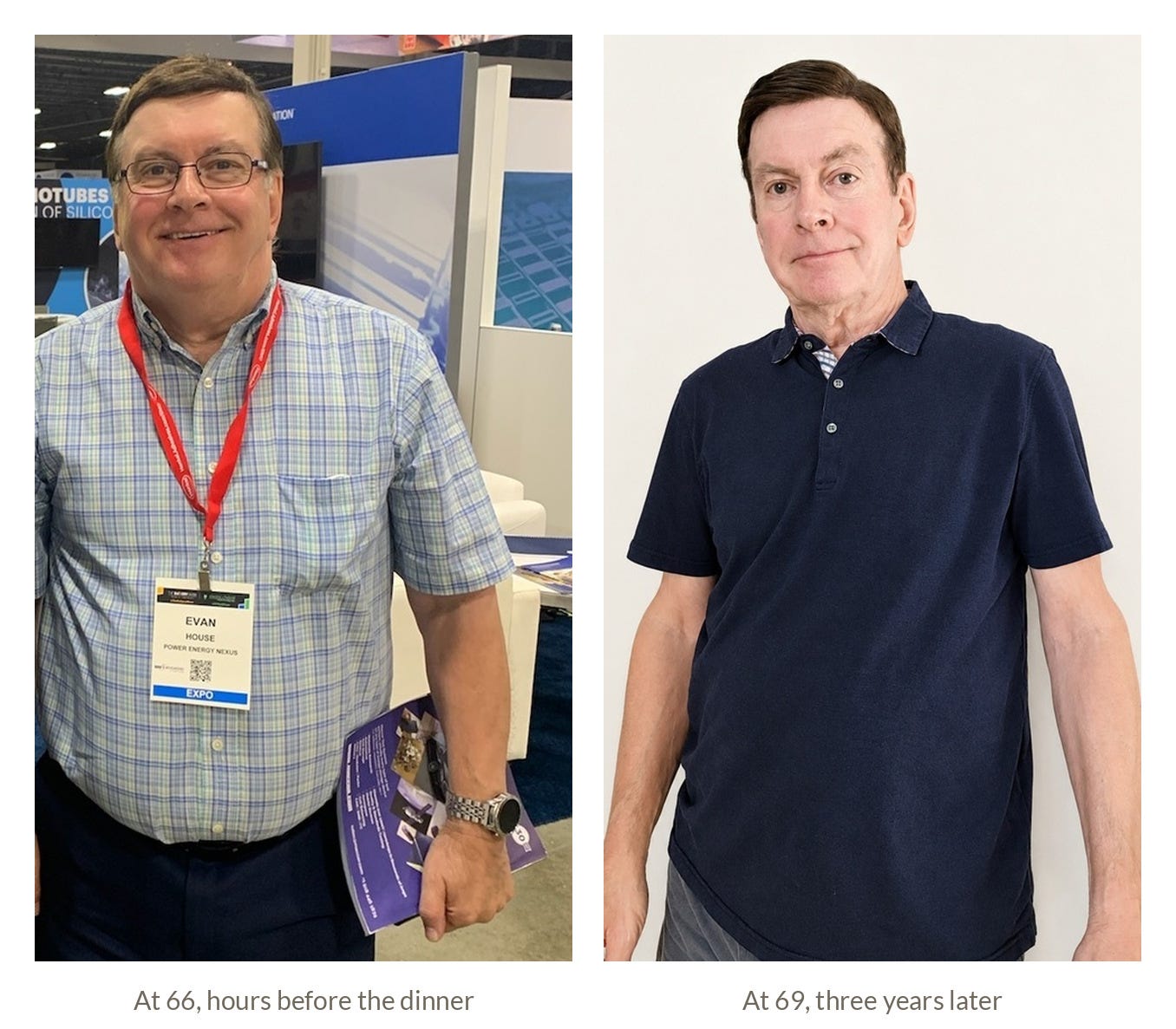
The difference was not willpower. It was not a supplement, a program, or a secret. It was that I finally turned the same instrument on my own body that I had spent forty years turning on everything else — and found that the map I had been handed was wrong.
I wrote a book about it. Butter in My Coffee is the investigation: how the dietary advice that governed American eating for seventy years was built, who profited from it, and what it did to the people who trusted it. It is not a diet book. There are no recipes and no meal plans. It is an argument, with the evidence attached. A second book, More Butter, follows on 22 September — the life behind the first one.
This newsletter is where the investigation continues.
Because a book has to close, and an investigation does not. New research keeps arriving. Old claims keep deserving a second look. And there is a great deal — mechanisms, history, the occasional public argument — that did not fit between two covers.
Here is what you will find:
The chemistry, explained plainly. What the substances now dominating our diet actually do in the body, and how we know.
The history and the money. How the advice got made, who it enriched, and why it has been so hard to correct.
The reasoning out loud. How to tell a strong claim from a weak one in a field crowded with both — including the claims I make myself.
And one thing more, which is the part I care most about: I audit my own rules in public. I am currently taking apart a stack of supplements I have taken for years, to find out whether I still need any of it. I do not know the answer. When I find out, I will tell you — including if it turns out I was wrong.
What you will not get from me.
A protocol. A supplement to buy. A meal plan. Or the claim that what worked in one body will work in yours. I am a single subject, and I have been careful, throughout, to keep the line between what I observed and what I merely believe explains it.
I am not selling you a way to live. I am showing you what happened when one man stopped taking the rules on faith and started checking them.
New pieces arrive most Wednesdays and Saturdays. Everything here is free. There is no course, no supplement, and nothing behind a wall. The books are the only thing I sell.
If you have ever been told your body is failing because of your age, your genes, or your character — and suspected the explanation was a little too convenient — you are in the right place.
Where to start:
If you have just finished Butter in My Coffee, start with Butter Took the Rap. It is a fifty-year wrongful conviction with a documented paper trail, and it is the closest thing here to a second chapter.
If you have not read the book and want to know whether the argument holds up, read that same piece. It stands alone.
If your question is the practical one — what does he actually eat — that is What I Eat, and its companion What I Drink.
And if you want the thing this whole newsletter is finally about — that almost everything shaping your health was decided by someone else, and one variable was not — that is The Only Lever You Actually Hold.
If you want to know who is writing all this, and why a man trained to diagnose complex systems spent forty years failing to diagnose himself, that is The Trait That Saved Me Nearly Killed Me. It is the shortest version of the story More Butter tells at length, and the closest thing here to a sample of that book.
Either way — welcome. I am glad you are here.
— V. E. House, PhD
I just finished reading Butter in My Coffee this morning. It was an easy and enjoyable read, much more concise than the many, many books I have read on health over the years. My diet journey took me to 7 years vegan (after a cancer scare) and then overnight to carnivore (or maybe ketovore) after realizing that my vegan way of eating had me nearing prediabetes. I plan to gift your book to several friends and family members in hopes of planting a seed that may now or in the future bear fruit for them. I am a strong believer in the keto/carnivore way of eating and have experienced positive results in my lipid panels. Thanks for the book. May you enjoy many more years of amazing health.
I am another new subscriber who just finished your book. I was so impressed by your synthesis of the whole story behind how humans evolved and how our dietary guidelines have been corrupted by the incentives provided in our society. It was refreshing to read such a balanced take on the subject. Whereas I might wear a t-shirt that identifies me as an angry conspiracy theorist, (not really) I loved that you left out the emotions and looked at the evolution of where we’re at more dispassionately. I have a hard time discussing these matters without getting emotional, and your book provides me with a way to communicate my views on the matter with those I love, who are less aware and suffering because of it.