

I drink coffee. I like it more than I can defend, which is the first thing worth admitting, because it means everything I’m about to say runs against my own preference. That’s usually the only condition under which an opinion about your own habits is worth anything.
This week the American Heart Association released a statement blessing coffee — up to five cups a day, safe for most adults, possibly good for the heart. The coverage was warm. A cardiologist quoted in the Journal said, and I am not paraphrasing, “We could even be recommending soon that people have coffee.”
I want to sit with that sentence, because it stopped me, and it stopped me precisely because I’m the person it flatters. Here is a health authority contemplating advising people to take up a psychoactive drug they don’t currently use. Not tolerating it. Recommending it. My first reaction, as a coffee drinker, was pleasure — good news for me and my habit. My second reaction, as someone who has spent a while now watching how these recommendations get made, was that I’ve seen this shape before, and it usually ends badly.
Start with what the evidence actually is. The lead author says it plainly: most of the studies are observational and cannot establish cause. What they show is that people who drink two to four cups a day tend to be healthier. That is a correlation, and correlations of this kind are haunted by a specific problem. Who drinks a steady two-to-four cups a day? Disproportionately, people with jobs, routines, mornings that have a shape, enough baseline health to want a ritual and enjoy it. Coffee may be less a cause of a healthy life than a marker of one. The unwell, the depressed, the frail often drift away from it. Compare the coffee drinkers to everyone else and some of what you’re seeing isn’t the coffee at all. It’s the life the coffee is attached to.
We have watched this exact error run its full course once already, and it cost us fifty years. The dietary advice that told a generation to fear fat and build its meals on grain rested on the same move: observational associations, treated as if they showed cause, hardened into population-wide recommendations. The associations were real. The causal story bolted onto them was wrong, and the guidance that followed helped produce the metabolic disaster we now live in. The lesson of that catastrophe was not “study coffee more carefully.” It was “stop recommending things to entire populations on the strength of correlations.” And here we are, a statement in Circulation, inching toward recommending a stimulant.
Now the part that actually gives me pause — the part I can’t argue my way out of, because it’s about me.
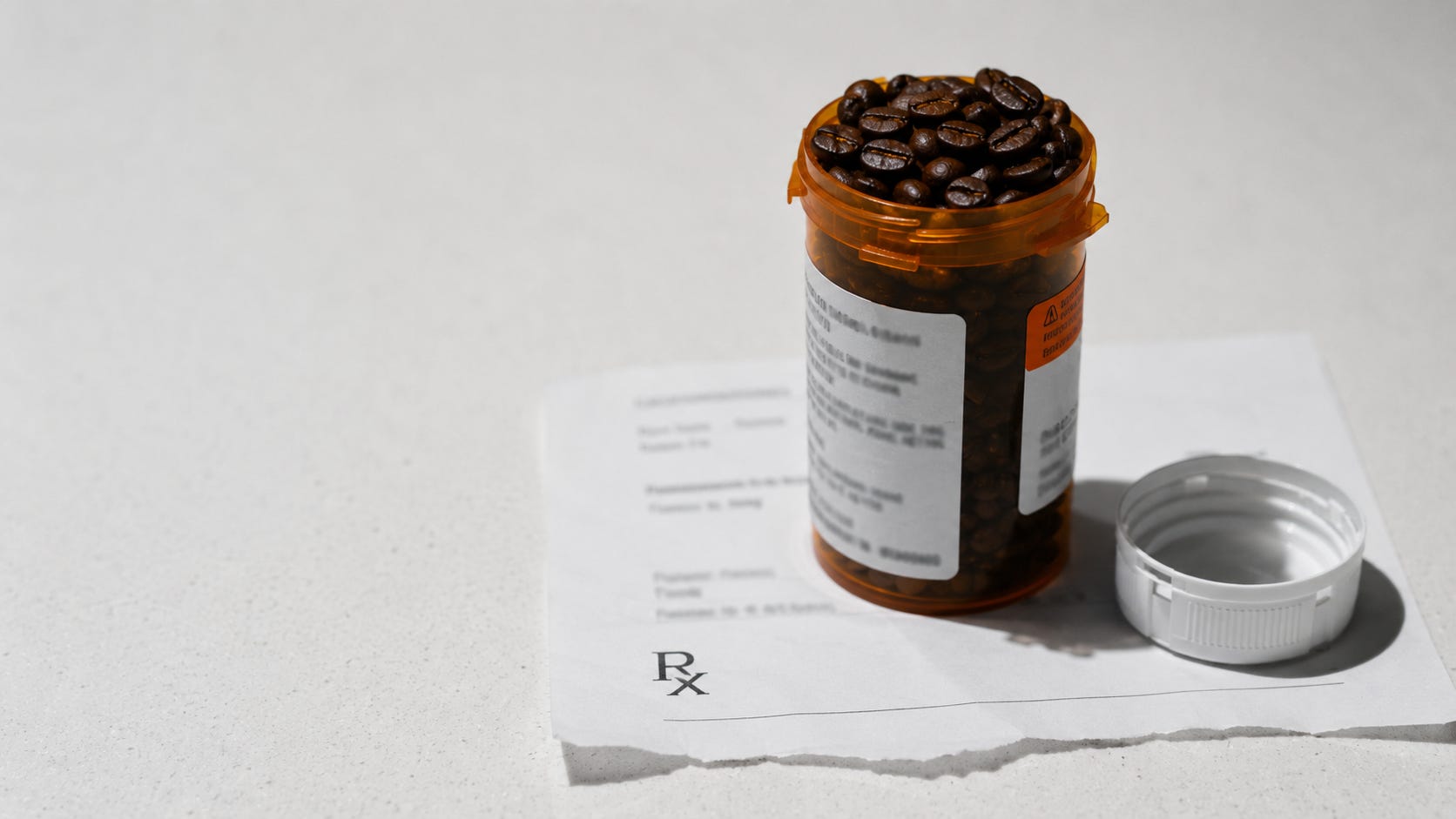
Coffee is not a component of a diet. It is not a nutrient. Nothing in a human body requires it. It is a mild, pleasant, dependency-forming drug that a great many of us — myself among them — take every morning because we like how it feels, and then build retroactive health justifications for. The honest name for a substance you don’t need, that you’d feel bad without, that you organize part of your day around, is not “heart-healthy beverage.” It’s a vice. A small and forgivable one, but a vice. I don’t need the American Heart Association to launder mine into medicine, and I should be suspicious of how much I want them to.
Because the observational point cuts the other way too. If these studies can’t prove coffee helps, they also can’t prove it doesn’t quietly cost something. Caffeine is a real drug with real effects — it raises cortisol, it degrades sleep in ways people systematically underestimate, it builds a dependency with a true withdrawal syndrome. It is entirely possible that a decade from now the honest verdict on daily coffee is more mixed than today’s headline, or worse than it. Substances we were sure were harmless have surprised us before, and always in the same direction: the reassurance came first, the complications came later, after everyone had already been told it was fine. I am not predicting that coffee will prove harmful. I am saying nobody knows — not me, not the AHA — and that “nobody knows” is a strange place to stand while edging toward telling people to start.
So let me hold my own vice to the standard I hold everything else to. I drink coffee because I like it. That is the whole of the reason, and it is a sufficient reason for a grown person to do a small, risky, pleasant thing. What I won’t do is dress it up. I won’t tell you it’s good for your heart, because the evidence can’t carry that weight. And I won’t be flattered when an authority tells me my habit is secretly a treatment, because that is exactly the move that should make all of us reach for our wallets to check they’re still there.
Enjoy your coffee. I’m going to. But enjoy it as what it is — a thing you choose, not a thing you need, and not a thing anyone has shown you should take up if you haven’t. The moment a vice starts arriving with a doctor’s note, the interesting question isn’t whether it’s still a vice.
It’s who benefits from you no longer calling it one.
I'm a tea drinker. Sure, it has antioxidants, but the carnivore proponents argue that they don't need them from plants. I drink it because I like it, because I like having morning rituals, and formerly, because it goes well with toast and pastries and all that. For now, I'll keep this habit, but if I change it, it won't be because some three-letter foundation or association or agency recommends it.